Charlie Loyd @vruba@everything.happens.horse
- charlie@planet.parts
- work
- geographical pixels
- where
- Xučyun/Oakland, Ohlone land, western Laurentian accretions
- who
- him
You know him on the internet. Eucalypt-adjacent; very occasional writer. Consulting and passively looking for work in geospatial, image processing, and related fields.
Joined Apr 2022
GNSS stuff
Last I played with consumer GNSS hardware much, the SiRFstarIII was considered very cool.
I just ran a new NEO-N9M overnight under a residential roof (no survey mode or anything) and got this wonderfully clean pattern.
All units are meters. I don’t know what pAcc actually is and neither does the official documentation.
This is like $50 for a USB-capable board with shipping and tax from a reputable seller. I’m delighted.

There’s what I would describe, in technical terms, as a “lazy fantasy map” vibe to the distribution of NGS survey markers.


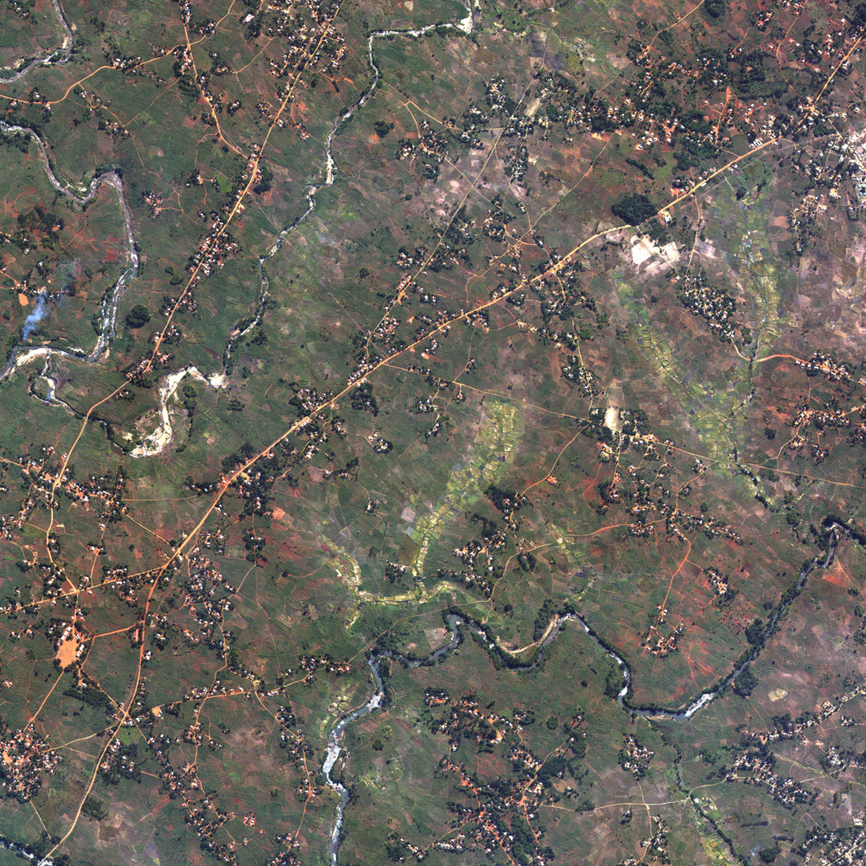
Fissures across a railway and someone’s orchard just north of İslâhiye.
Türkiye is standard gauge, so that’s basically two offsets of ~70 cm just in this little area. (Pan pixels from Maxar 1040010082698700 at 31 cm resolution; the image is about 320 m or 1000 ft across.)
This is not the part of the image with the rawest human interest, but I think it shows some of the scale of what happened without feeding into voyeurism.


Me, watching the cat’s whiskers twitch as she sleeps on the couch: I bet she’s dreaming about catfood 😌
The cat:

Top to bottom: my sense of how the cat’s day went; the cat’s sense of how the cat’s day went.


[nodding thoughtfully:] As true of me today as it was of hadrosaurs 75 million years ago.

In conclusion, all the science happening in the heat index field is extremely normal and definitely absolutely nothing to be worried about.

Stipple of a hillshade of Tahoma.
The point placing algorithm is freely adapted from @BartWronski’s version of Ahmed, Ren, and Wonka’s stippling: https://bartwronski.com/2022/08/31/progressive-image-stippling-and-greedy-blue-noise-importance-sampling/
The data is from the WA lidar portal: https://lidarportal.dnr.wa.gov/
The hillshade is a mean of 1,000 angles from which the sun actually illuminates Tahoma over the year. (None of that top-left stuff for me, thanks.)

Buoy 46059 is having a real time, and this isn’t even that close to the middle of the storm. https://www.ndbc.noaa.gov/station_page.php?station=46059


- charlie@planet.parts
- work
- geographical pixels
- where
- Xučyun/Oakland, Ohlone land, western Laurentian accretions
- who
- him
You know him on the internet. Eucalypt-adjacent; very occasional writer. Consulting and passively looking for work in geospatial, image processing, and related fields.
Joined Apr 2022