Charlie Loyd @vruba@everything.happens.horse
- charlie@planet.parts
- work
- geographical pixels
- where
- Xučyun/Oakland, Ohlone land, western Laurentian accretions
- who
- him
You know him on the internet. Eucalypt-adjacent; very occasional writer. Consulting and passively looking for work in geospatial, image processing, and related fields.
Joined Apr 2022
Adding to that repost: Do not blur (or pixelate) things to hide them. Unblurring is pretty practical in a lot of cases. If you want to hide something in a photo, the simplest, safest way is to cover it with a block of solid color.
Charlie Loyd
boosted

This is your regular SAFETY REMINDER that the tickmarks printed along the bottom of your mail, possibly in very faint ink that you have to double-check is there, is just your address encoded digitally. If you are covering your address for a photo, you MUST cover the tickmarks too!
[Do not send me long-winded whines that it's not teeeeeeeechnically your address at least in the US postal system, just the location of your mailbox, as if that's not quite equivalent for all practical safety purposes]
Charlie Loyd
boosted
[Looking at a society where decision-making power is strongly inversely correlated with exposure to the consequences of one’s decisions:] Now hang on, why are there so many bad decisions?
Charlie Loyd
boosted
I would just like to assure everyone with a strong opinion about a huge, complex, social topic that you’re really close to winning everyone over if you can just post three or four more specific incidents that really demonstrate your argument. Those compelling examples of single things will finally prove the general case. Just point out a few more instances of someone wearing sandals winning a charity raffle or a bingo game and we’ll all believe sandals are lucky. Keep going! Almost there!
So I think I’m borderline resolving the continental drift signal with $50 of hardware under a roof.
This makes me happy because it’s pretty comparable to the trend from a nearby science-quality GNSS receiver: https://sideshow.jpl.nasa.gov/post/links/EBMD.html
But it’s been a year, so I tested the main thing I wanted to see. If I aggressively remove outliers, average across long time periods, and eyeball a few load-bearing parameters just right – so I want to be clear that I’m not claiming rigor, only that it’s good enough for me personally – the data shows a velocity of 27.5 mm/year west, 14.4 mm/year north. (This is on the order of 1 nanometer/second.)
Its output goes straight to a postgres database on a small always-on computer. Its SSD failed a few months ago, so I lost a chunk of data, but basically it’s just recording the chip’s output. Under my roof, you might note.
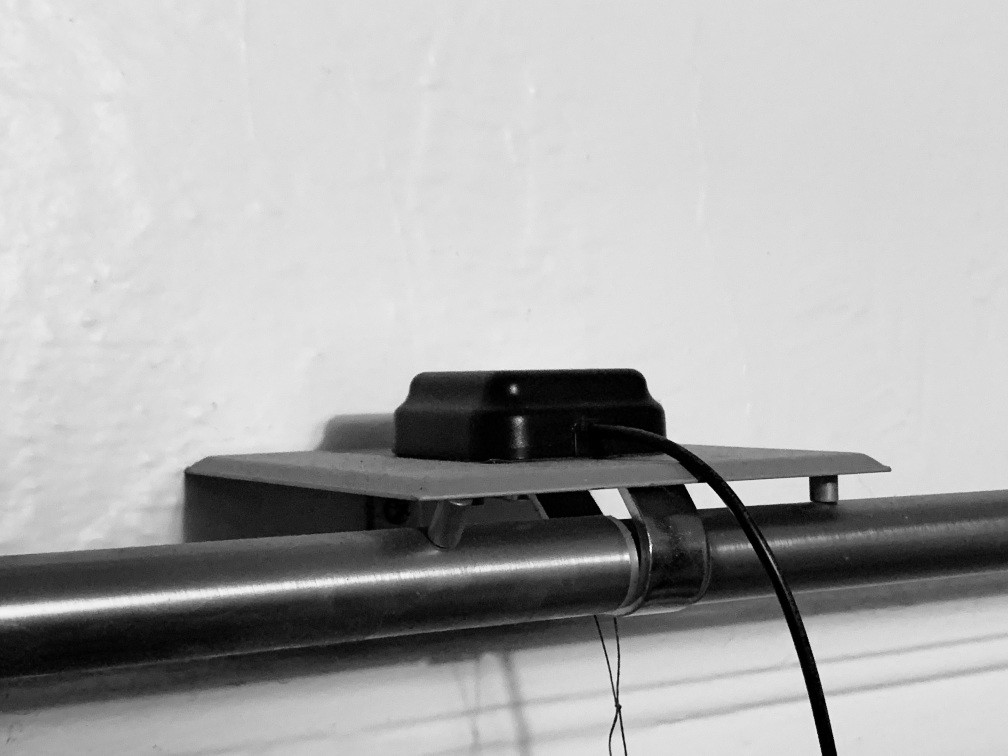
One of them has been sitting on the top of the curtain rod over my desk, carefully wedged in place with magnets and a makeshift ground plane.
Last summer, I got a couple of these little USB GNSS chips, a notch above the usual consumer quality but a notch (and $200) below the RTK-capable kind: https://mou.sr/4hrR4PY
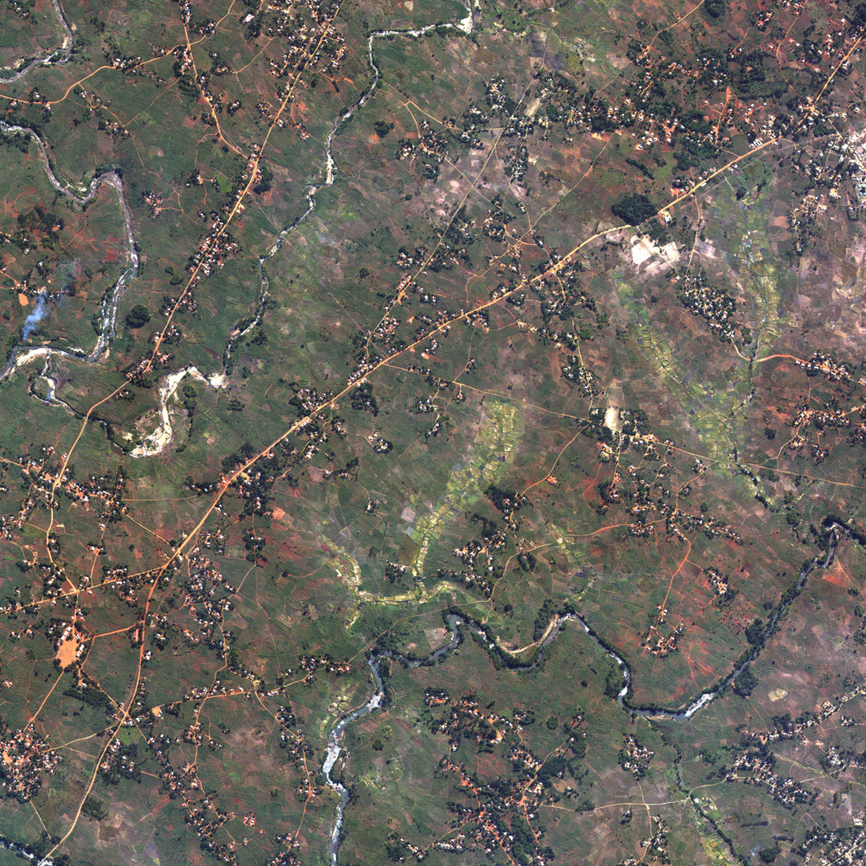
Somewhat bananas suggestion that there’s an ancient Zoroastrian necropolis in inland Madagascar: https://www.tandfonline.com/doi/full/10.1080/0067270X.2024.2380619
Charlie Loyd
boosted

No, you don't have to be in the academy to contribute to the noble pursuit of building human knowledge, all you need is
oh

The magic thing about python’s sys.exit() is you don’t have to worry about importing it; if you forget, the script exits when it gets there almost exactly as if you had.
I want to map from a small input to a large output with interpolation in the output and I’m going to be able to figure it out but it’s going to feel like doing my taxes the whole time.
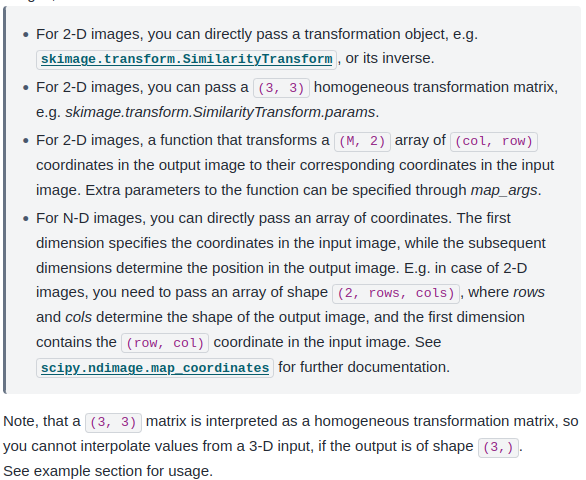
I have come to a place in some personal-project code where I need to use skimage.transform.warp and I keep tabbing over to the documentation, sighing, and tabbing away.
This @kissane talk is worth your time if you’re interested in pretty much anything I’m interested in. https://xoxofest.com/2024/videos/erin-kissane/
Charlie Loyd
boosted
Roughly what are the odds that recognizable signs of extraterrestrial life are within our present technological and conceptual reach and we just haven’t noticed yet?
Roughly what are the odds that recognizable signs of extraterrestrial life are within our present technological and conceptual reach and we just haven’t noticed yet?
Huh. Just had a wild, cascading run of great ideas for a work project I finished like 7 years ago.
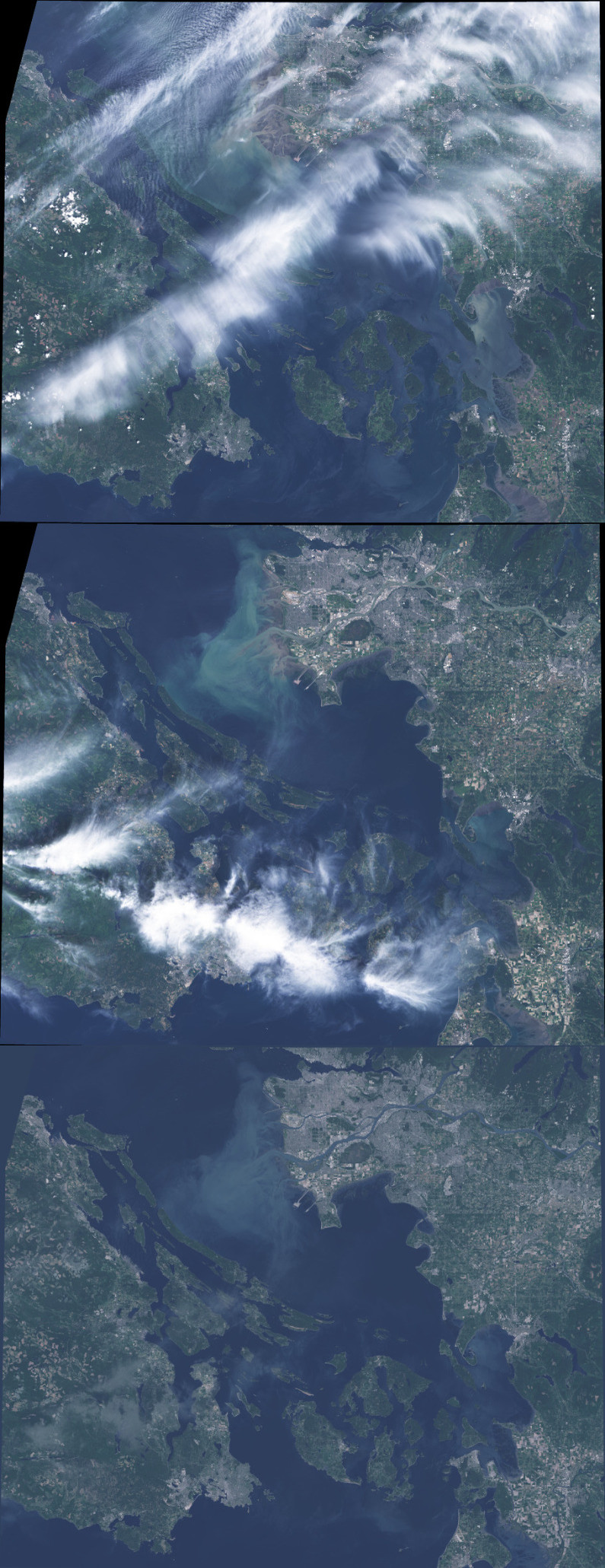
Weekend project: tinkering with cloud removal from Landsat stacks. Here the top two images are inputs and the bottom is output from them alone.
It’s strictly pixelwise and n→1 (deep set–style), so it scales to any stack depth. Notice it fills the nodata with the training set average color, and the cloud overlap with a sort of polite fog.
- charlie@planet.parts
- work
- geographical pixels
- where
- Xučyun/Oakland, Ohlone land, western Laurentian accretions
- who
- him
You know him on the internet. Eucalypt-adjacent; very occasional writer. Consulting and passively looking for work in geospatial, image processing, and related fields.
Joined Apr 2022